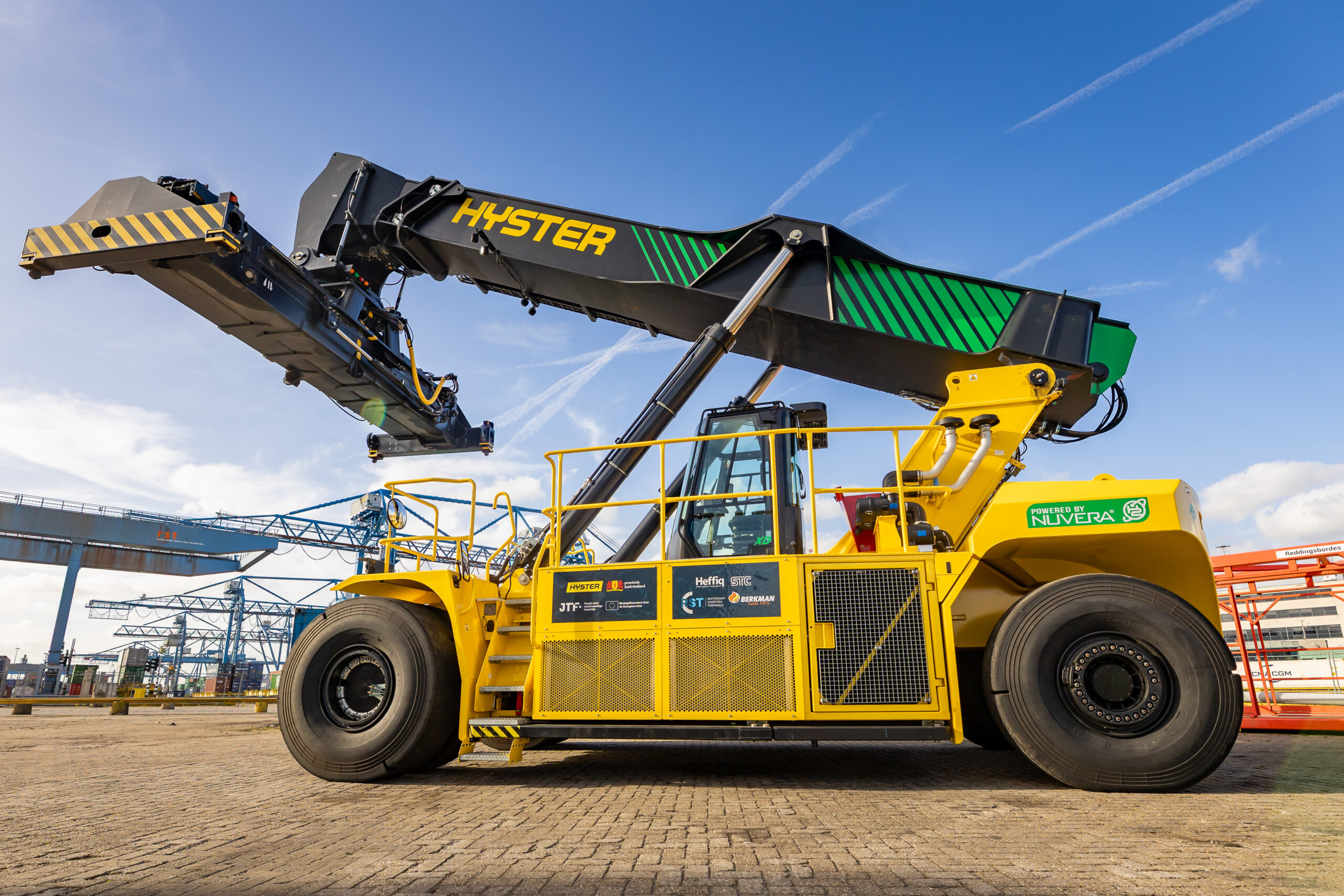
The introduction of a hydrogen fuel-cell reachstacker at Rotterdam Shortsea Terminals is being paired with a workforce development programme. The five-year initiative will train employees, students and logistics professionals in the energy transition and in the safe, efficient use of hydrogen.
The Hyster RSJ46-33XDH/62 will handle mainly 45-foot containers, including open-top units. It uses a 60kW Nuvera fuel-cell engine and a 130kWh lithium-ion battery. Local authorised dealer Heffiq will support the equipment through its service organisation, while Hyster specialists will work with the customer during the project.
Skills for hydrogen operations
The partners are creating a joint experience centre as part of a wider field laboratory at the port. Training is intended to connect classroom learning with the practical requirements of hydrogen-powered container handling, including safe operation and efficient use of the equipment.
RST, Berkman Energie Services, Hyster, STC Next and HarbourHUB are collaborating on the programme, which is supported by the Province of South Holland and the European Union’s Just Transition Fund. Alongside the reachstacker, the project includes a modular hydrogen refuelling station.
The workforce element reflects the operational demands of the energy transition. New equipment requires people who understand its controls, diagnostics, safety procedures, refuelling arrangements and maintenance needs. Hyster’s common software architecture for electric products may also help create a more consistent operator and service experience as terminals introduce different low-emission technologies.
For workers and trainees, the project offers exposure to an emerging industrial application in a live terminal environment. For employers, it provides a way to develop relevant capability while the technology is being evaluated. The initiative is also expected to contribute to future regulation, standardisation and the sustainable development of port logistics.